Q: We have recently changed my horse into a bitless bridle, and he absolutely loves it. He is a different horse. I'd like to keep competing. What disciplines am I allowed to compete in? A: You are allowed to compete in showjumping and equitation with a bitless bridle. Certain showing classes are permitted for adults…
Rethinking what’s ‘normal’ The sight of a horse moving in a bridle, poll flexed, lips gently closed, has long been seen as the mark of advanced schooling and correct work. However, new research into bridle and bit pressure, nerve pathways, and facial anatomy is challenging that assumption, suggesting that many horses perform despite discomfort, rather…
Text: Christie Wolhuter The Baucher or hanging cheek snaffle is a popular bit but has classically divided opinions on its action. Correctly fitted, the cheekpiece attaches to the small rings, and the reins attach to the larger rings. Action There has been a long-held belief that the hanging cheek snaffle, or Baucher bit, exerts poll pressure, and…
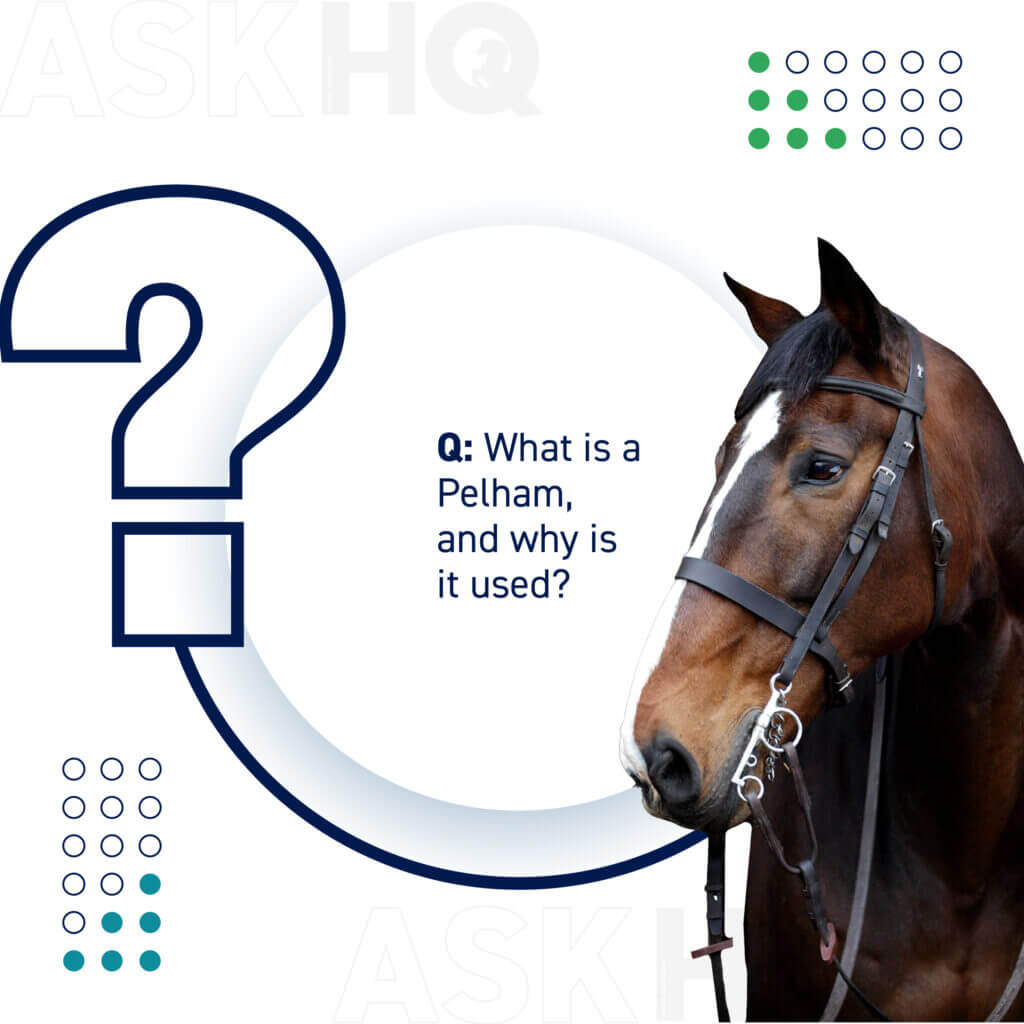
Q: What is a Pelham and why is it used? A: A Pelham combines elements of both snaffle and curb bits. The Pelham consists of a single mouthpiece with a ring on either end, similar to a snaffle, and a shank that extends downward from each ring. It typically features a curb chain, which applies pressure on…
Q: What is a mechanical hackamore? A: A mechanical hackamore is titled misleadingly, as it is not really a hackamore at all, but a bitless bridle that uses leverage points on the horse's nose, jaw and poll. When pulled by the reins, shanks put pressure on the noseband, bringing the curb chain up against the chin and…
Q: Is it true that you need to see two ‘smile rings’ in the corners of your horse’s mouth to know that the bit is hung at the correct height? A: When it comes to how high you should hang the bit, most trainers will tell you that when the bit is adjusted correctly there will…
By Charlotte Bastiaanse Contact and connection The m ajority of well-schooled horses ‘accept a contact’ , but what does that actually mean? A misconception as old as time is that if the horse has his head down and nose at the vertical, then he’s accepting the contact . I t’s important to…
Q: My horse tosses his head when he comes up from a stretch? Why is this? Asked by Kath Harrison A: A stretch is often a surprisingly different movement for a horse to perform. In order to stretch and regather well, a horse must be truly in balance. If your horse struggles to balance or accept the…
Q: Why is 'test driving' a bit such an important part of the process? A: When you have an idea of the horse's anatomy, you can start to test-ride a certain bit. The anatomy can only tell you what does or doesn't fit in the horse's mouth; it cannot tell you the horse's preferences nor the…
Despite the wide variety of bits available on the market, the principles of bitting can really break things back down to basics. There are in total considered to be five bit groups in total. These are: the Snaffle the Weymouth the Pelham the Gag the Bitless Bridle All of these five types of bit act…